Water in a basement often arrives through more than one path. Rain may collect near the foundation, groundwater may rise under the floor, and cracks may allow dampness to move through concrete walls. Stains, musty odors, peeling paint, and puddles are clues that moisture is entering faster than the space can dry.
People researching waterproofing basement round rock often compare interior drainage with exterior excavation. Waterproofing basement spaces begins with finding the source of the water, the pressure behind it, and the route it follows indoors. A coating alone may hide a stain for a while, but lasting work must manage the water before it reaches finished walls and stored belongings.
How Water Reaches Basement Walls
Concrete is dense, yet it is not completely waterproof. Small pores may absorb moisture, while cracks and wall joints create direct paths for seepage. Water may also enter where the wall meets the floor, around utility openings, or through window wells.
Poor grading and short downspouts often increase the pressure against foundation walls. Clogged gutters, leaking pipes, low spots beside the house, and compacted soil may keep the area wet long after a storm has passed. Finding these outside conditions is an important part of any inspection.
Interior Waterproofing and Drainage
Interior systems manage water after it reaches the foundation. A perimeter drain is commonly installed near the floor edge to collect seepage and direct it toward a sump basin. The pump then moves water away from the house through a discharge line.
Wall membranes or drainage panels may guide moisture into that channel. Crack injection may seal a specific opening, while dehumidification reduces indoor humidity after bulk water has been controlled. Interior waterproofing basement work is often less disruptive because crews do not need to excavate the entire exterior wall.
Exterior Waterproofing Around the Foundation
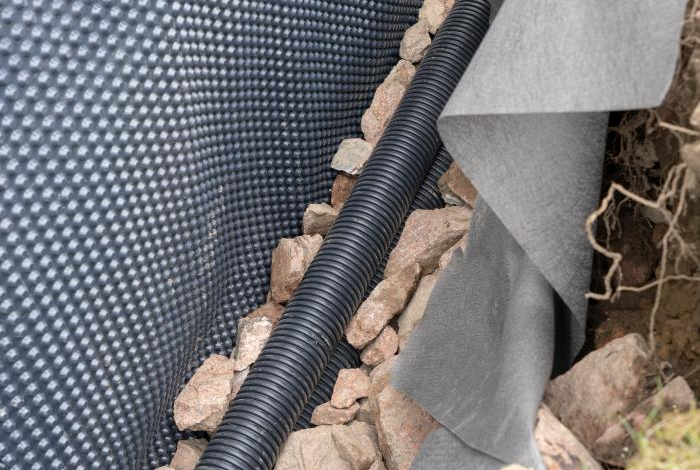
Exterior work aims to stop water before it enters the wall. Soil is removed beside the foundation so cracks, joints, and damaged coatings are exposed. The wall may then receive repairs, a waterproof membrane, drainage board, and footing drain improvements before the soil is returned.
This method reaches the outside face of the wall, where water pressure begins. It may be the stronger choice for severe seepage, failing exterior coatings, or repeated moisture around several wall sections. Access, landscaping, patios, utilities, and excavation depth may make the project larger than an interior system.
Which Method Fits the Problem
No single method suits every wet basement. Interior drainage is useful when groundwater rises near the floor or when exterior excavation is difficult. Exterior waterproofing may be preferred when surface water is pressing through the wall or when the outside foundation already needs repairs.
Some properties need a combined approach. Grading and downspout changes may reduce surface water, while an interior drain manages groundwater below the floor. Crack repairs, window well covers, sump pumps, and discharge improvements may support the main system.
What Affects Basement Waterproofing Cost
Cost depends on the source of the water, basement size, wall condition, excavation depth, access, drainage length, pump equipment, and finish removal. A single crack repair costs far less than excavating several exterior walls or installing a full interior perimeter drain.
A written proposal should describe the moisture source, repair areas, materials, drainage route, pump capacity, discharge location, cleanup, and warranty terms. Comparing complete scopes is more useful than comparing one total price because estimates may cover very different work.
Is Waterproofing Worth the Investment
Repeated basement moisture may damage flooring, drywall, stored items, insulation, and wood framing. Damp conditions may also create musty odors and make the space difficult to use. Waterproofing basement areas is often worthwhile when water returns after storms, seepage spreads, or repairs are needed before finishing the space.
The U.S. Environmental Protection Agency explains that controlling moisture begins with drainage, leak repair, and keeping water away from foundations. Those steps support indoor moisture control and reduce conditions that encourage mold growth.
Does Insurance Cover the Work
Insurance coverage depends on the source of the water and the policy language. Standard coverage may respond to sudden events such as a burst pipe, but gradual seepage, groundwater, and routine waterproofing are commonly excluded. Flood insurance also has separate rules and limits.
The policy, photographs, inspection notes, and repair estimates should be reviewed before work begins when a covered event may be involved. The insurer decides coverage, while the contractor documents the physical conditions and proposed work.
See also: The Importance of Timely Plumbing Repairs for Home Safety
When to Schedule the Project
Waterproofing may be performed in several seasons, though dry weather often makes excavation and exterior coating work easier. Wet periods reveal active seepage paths and pump performance. Serious leaks should not wait for a preferred month when water is damaging materials or entering near electrical equipment.
Early planning leaves time to compare methods, prepare access, move stored items, and coordinate landscaping or finish repairs. The schedule should reflect the moisture source rather than the calendar alone.
Can You Waterproof a Basement Yourself
Simple maintenance tasks may reduce minor moisture. Cleaning gutters, extending downspouts, sealing small utility gaps, and correcting shallow low spots may improve drainage around the house. Store-bought coatings may also reduce light dampness on sound walls.
DIY work is less suitable for active wall movement, wide cracks, standing water, repeated pump failure, or strong pressure through the wall-floor joint. Those conditions require a closer review because covering the surface may leave the main water path unchanged.
Conclusion
Interior and exterior waterproofing serve different purposes. Interior systems collect and remove water after it reaches the foundation, while exterior work blocks moisture at the outside wall. The right choice comes from the source of the water, wall condition, access, drainage, and long-term plans for the basement.
Round Rock Foundation Repair Specialists evaluates seepage, cracks, drainage, sump equipment, and foundation conditions before outlining the work. Schedule an inspection for a clearer path toward a dry and usable basement.